
Ola Electric’s Project Hail Mary
Ola Electric’s share price has doubled from its March lows, despite lingering concerns over market share loss and profitability. What gives?

For a company whose quarterly ebitda loss exceeds its revenue on a quarterly basis, a doubling of the share price in a matter of months would seem difficult to justify. Yet that is exactly what has happened at Ola Electric Mobility Ltd.
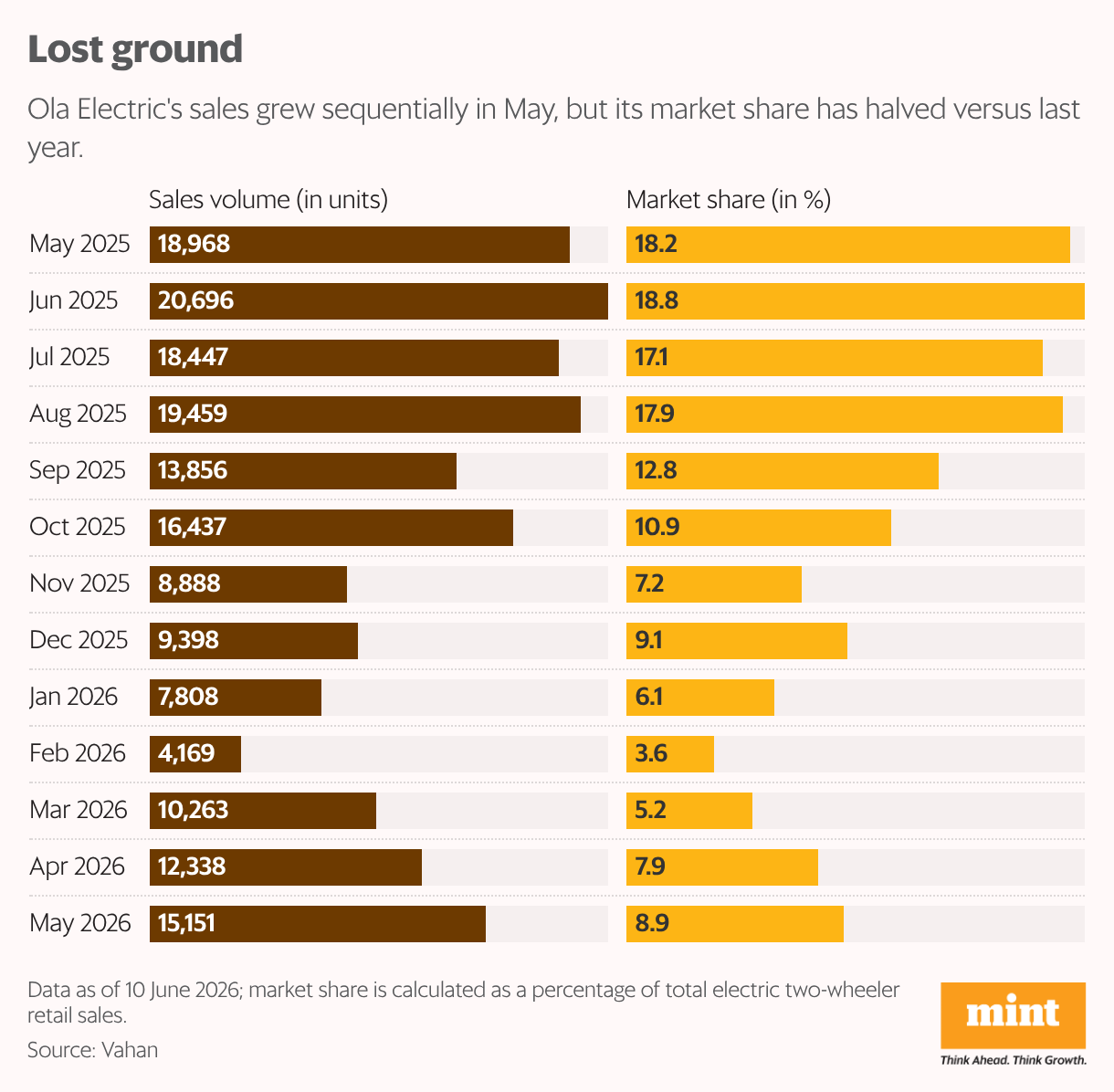
The electric two-wheeler maker has had a turbulent run since its blockbuster IPO in August 2024. A combination of product issues, service challenges and an uneven expansion strategy has dented its once-dominant position. In May, its sales fell 20% year-on-year even as the broader electric two-wheeler market expanded 60%. There was sequential growth, sure, but that still doesn’t explain the doubling of the stock price.
What do investors know that we don’t?
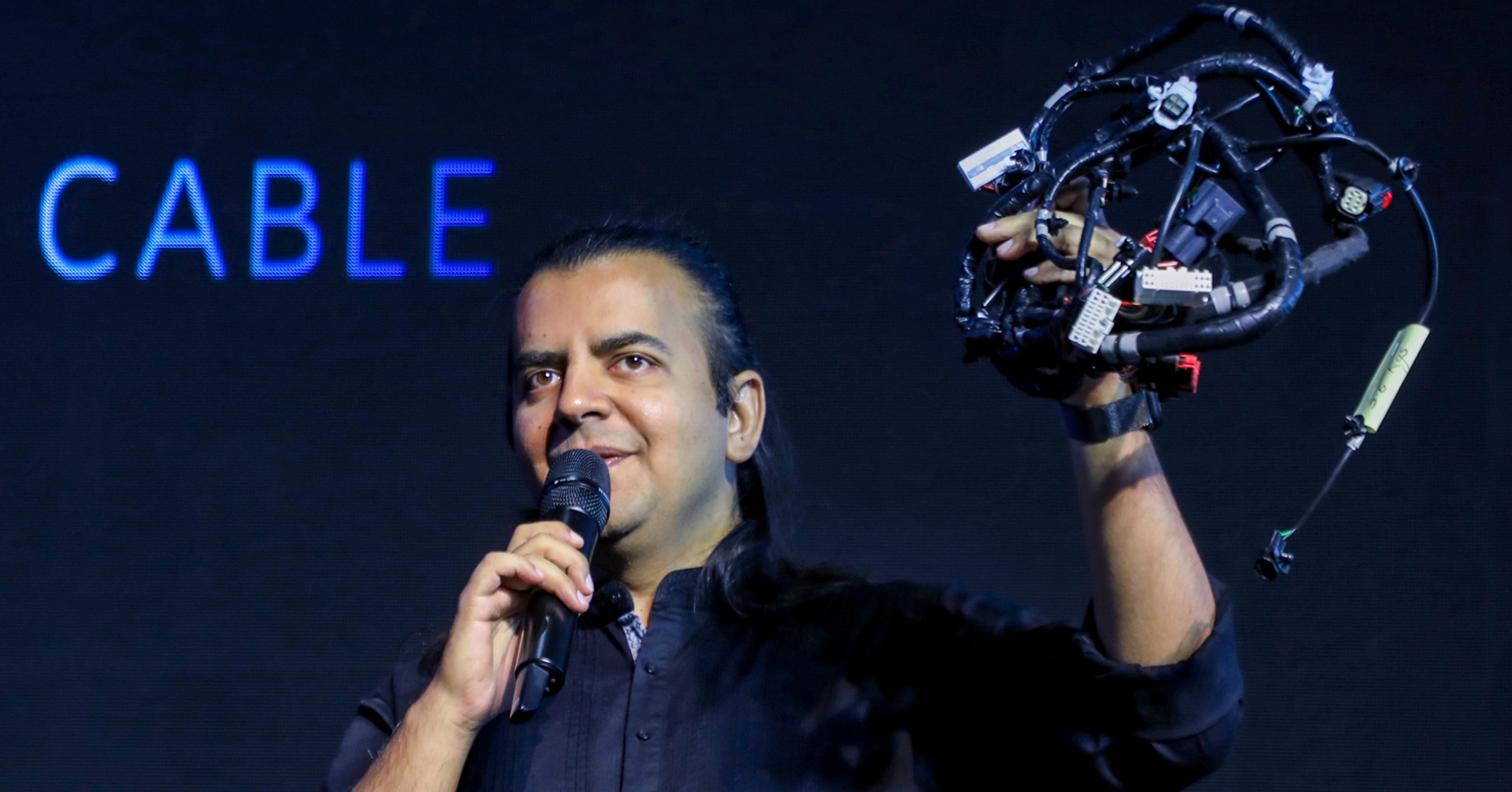
The answer may lie less in scooters and more in founder Bhavish Aggarwal’s ambition to build a vertically integrated EV ecosystem.
Ola Electric has invested heavily in manufacturing its own battery cells and remains the only firm to have commissioned a giga-scale manufacturing facility and achieved operational cell production under a production-linked incentive scheme. The 4680 Bharat Cell is no longer a concept. It exists, even if Ola Shakti’s cell chemistry still faces challenges.
Still, perception is reality. Ola Electric is at least doing something that’s visible. Investors are valuing the firm on the prospect of an integrated EV platform—where in-house cells power its own two-wheelers—rather than the reality of dwindling sales. The recent ₹780 crore QIP has added to that optimism.
But making EV cells is far more complex than selling scooters. After all, even Reliance New Energy Battery Storage Pvt. Ltd. has yet to commission its giga complex in Jamnagar. As for ACC Energy controlled by Rajesh Exports Ltd., it’s a different story altogether. If the Ola Gigafactory fails as spectacularly as the Futurefactory has, the recent rally in the stock will be no more than a blip in a downturn. Read more.
MARKET WATCH
India’s stock market was little changed today, as gains in heavyweight financial stocks offset a broader selloff sparked by renewed escalation in the West Asia conflict. Benchmark Nifty 50 fell 0.12% to end at 23,214.95, while the Sensex gained 0.09% to 73,983.18.
Since the conflict erupted in late February, the two benchmarks have fallen 7.8% and 9%, respectively, as foreign investors pulled about $29 billion from the market.
🔗 10 key highlights from India’s stock market today
BEST OF MINT
In tomorrow’s print edition:
M2M: Adani Green is building faster than the grid can handle
Explainer: What happens when IT has as many AI agents as humans?
Opinion: SpaceX IPO: Does Musk have a divine right to rule the business?
News: Spacetech dominates first disbursals under ₹1-tn innovation fund
MINT MONEY
Why the return to large caps can wait
India’s equity investors may be confronting something many have never seen before: two consecutive years of muted returns.
What makes the situation unusual is the age profile of today’s investor base. A large share entered the market after the covid crash, when equities rebounded sharply and every meaningful dip was eventually rewarded. For many of them, buying the dip has been less a strategy than a market reality.
Their expectations are not necessarily built around investing patiently for years and waiting for returns to emerge. Instead, they have grown accustomed to markets recovering quickly and pushing to new highs.
This time, however, appears different. Read on.