
Mind the Gap
Plus: Fresh test for India-Bangladesh ties; and India's stubborn bond yields.

Good morning!
India’s trade deficit widened to $34.68 billion in January, the highest this fiscal, as imports jumped sharply even though export demand, especially from the US, remained relatively resilient under steep tariffs.
Exports slipped to $36.56 billion month-on-month, while imports surged to $71.24 billion, widening the gap. Shipments to the US moderated in January but remained strong cumulatively, reflecting exporters’ ability to adapt despite pricing pressures. Bilateral trade with China also expanded, underscoring India’s continued reliance on Chinese inputs.
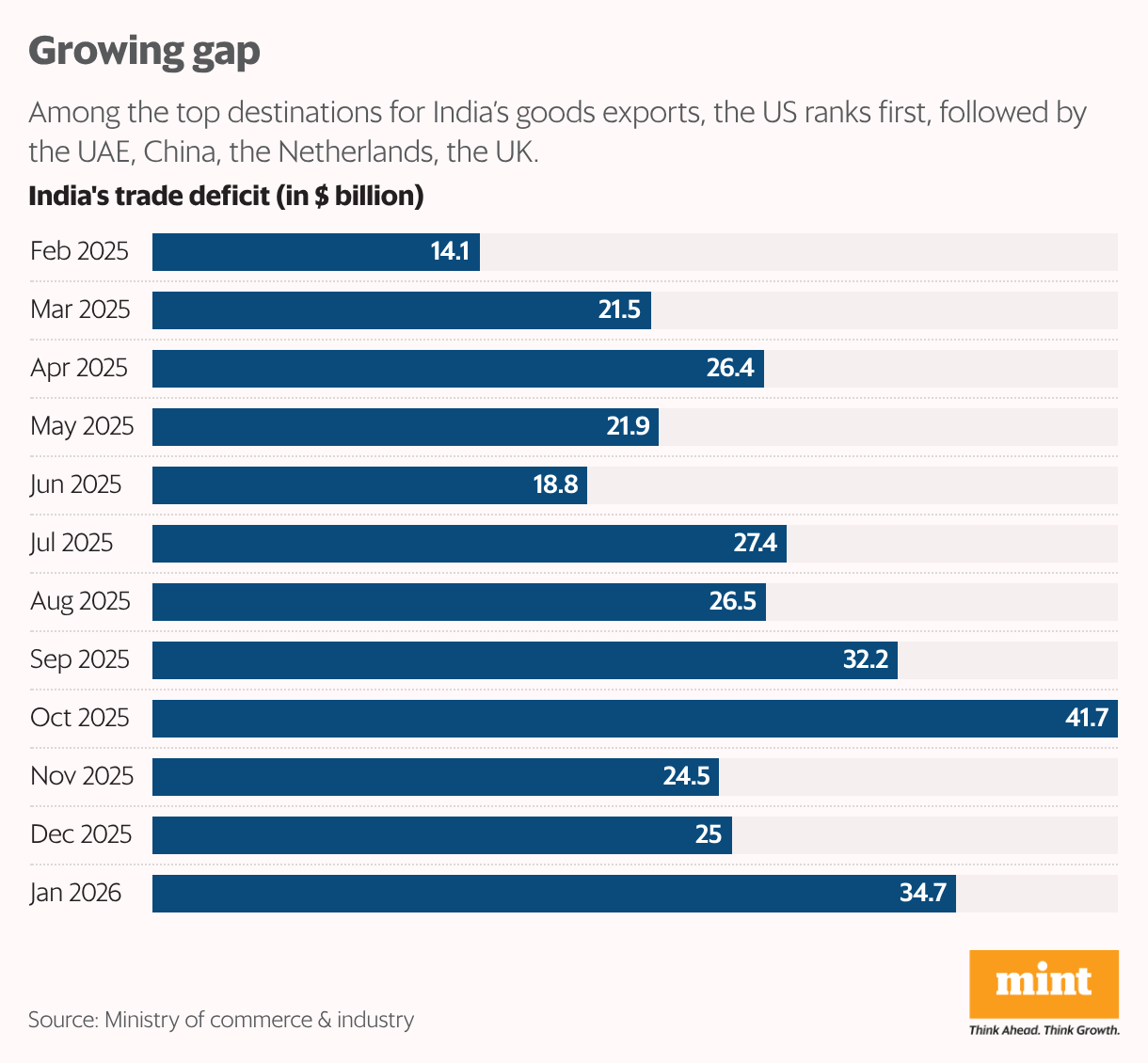
In the fiscal through January, merchandise exports rose modestly while imports grew faster, pushing the goods deficit to $283.23 billion. Services exports remained robust, cushioning the overall trade balance.
Officials said negotiations for an interim India-US trade agreement are progressing, with a mini deal possible by March.
MARKET WATCH
BSE Sensex: 83,277.15 (🔺0.79%)Nifty 50: 25,682.75 (🔺0.83%)Dollar/Rupee: 90.78 (🔺0.27%)Gold: ₹1,54,697 (🔻0.77%)Brent Crude: $66.92 (🔺0.48%)Bitcoin: ₹61,23,148.63 (🔻1.92%)THE MAIN STUFF
India AI Summit means business
India’s AI Impact Summit is shaping up less as a rule-making forum and more as a global business showcase.
Unlike earlier meetings in the United Kingdom, South Korea and France that produced non-binding declarations, industry leaders expect this edition to prioritise funding, partnerships and data-centre investments.
With the likes of Sam Altman and Sundar Pichai attending, India is pitching its startups and private firms to global investors. Experts say geopolitical divides make a unified AI rulebook unlikely, so the real win may be attracting capital, collaborations and credibility for India’s AI ecosystem. Read more.
Where trust travels fastest
In Chanegaon village in Maharashtra’s Ahilyanagar district, sugarcane farmer Vitthaldas Balkisan Asawa traces farming’s biggest shift not to weather or prices but to the fading joint family. Earlier, shared experience meant quick, trusted advice. Today, time-poor farmers often rely on nearby input shops.

Asawa recently turned instead to the MahaVISTAAR app for pest guidance. Following its lower dosage recommendation saved him about ₹2,000 per acre and strengthened his trust in university-backed advice.
Across Maharashtra and into Gujarat’s dairy belt, the real contest is clear: whoever answers farmers fastest, and most credibly, shapes decisions that directly affect costs, crops and livelihoods. Read more.
Bangladesh transition puts India ties to the test
Bangladesh will swear in Tarique Rahman as prime minister on Tuesday after the Bangladesh Nationalist Party won a commanding mandate, ending 18 months of interim rule under Muhammad Yunus. The shift follows the ouster of Sheikh Hasina and the ban on the Awami League, marking a sharp political reset.
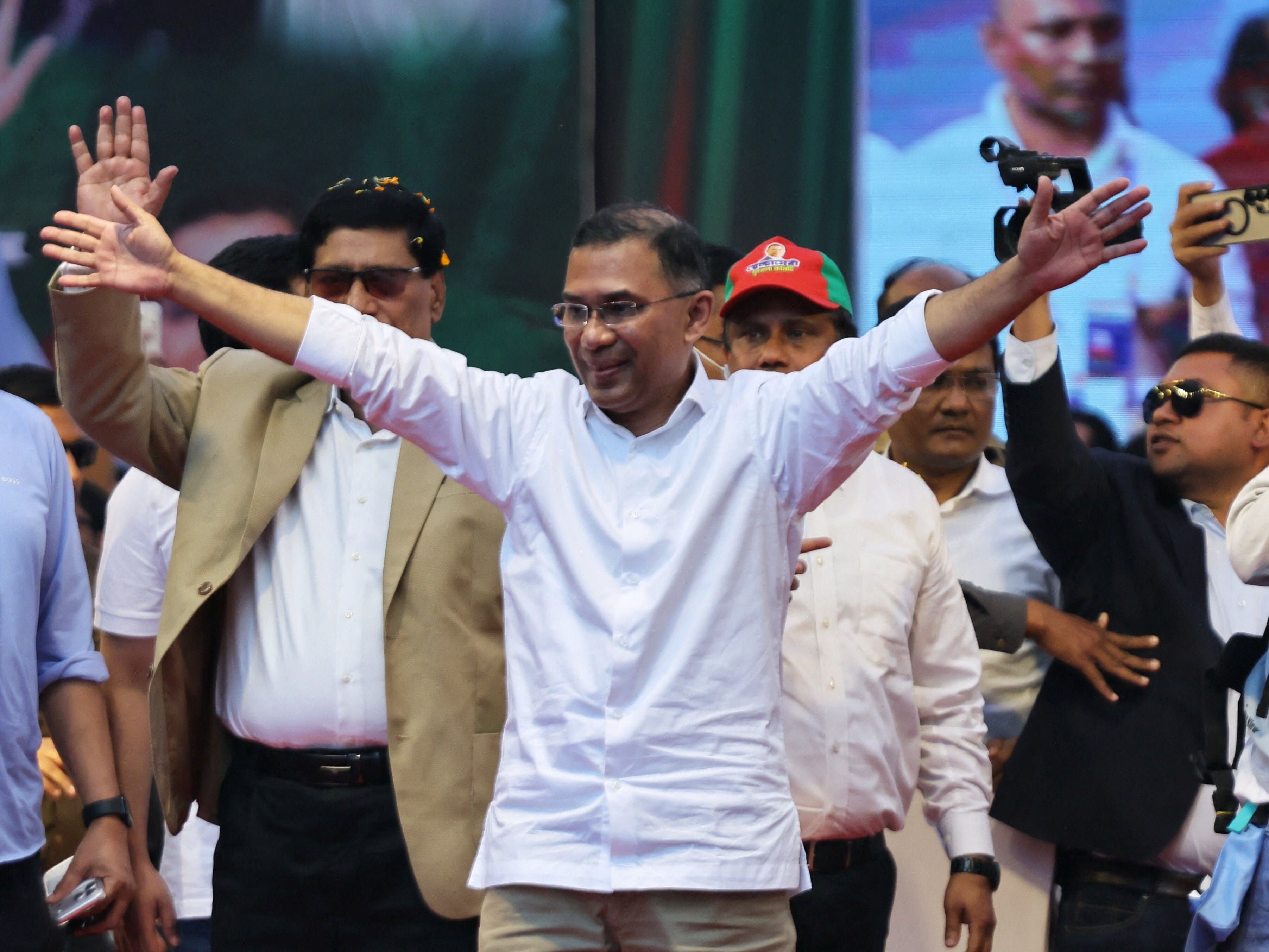
For India, the moment is delicate: ties have cooled, China’s footprint is rising, and anti-India sentiment remains elevated. New Delhi’s early outreach signals intent to stabilise relations, but rebuilding trust with Dhaka’s leadership and youth will determine whether the neighbourhood partnership steadies or frays. How will the transition of power play out for the India-Bangladesh ties? Read this explainer for a clearer picture.
The strange signal of India’s stubborn bond yields
India’s debt market is sending a strange signal: home loans are now cheaper than sovereign borrowing. Loans from the State Bank of India hover near 7.25%, while long-term government bond yields remain elevated, even after the Reserve Bank of India’s aggressive policy easing.
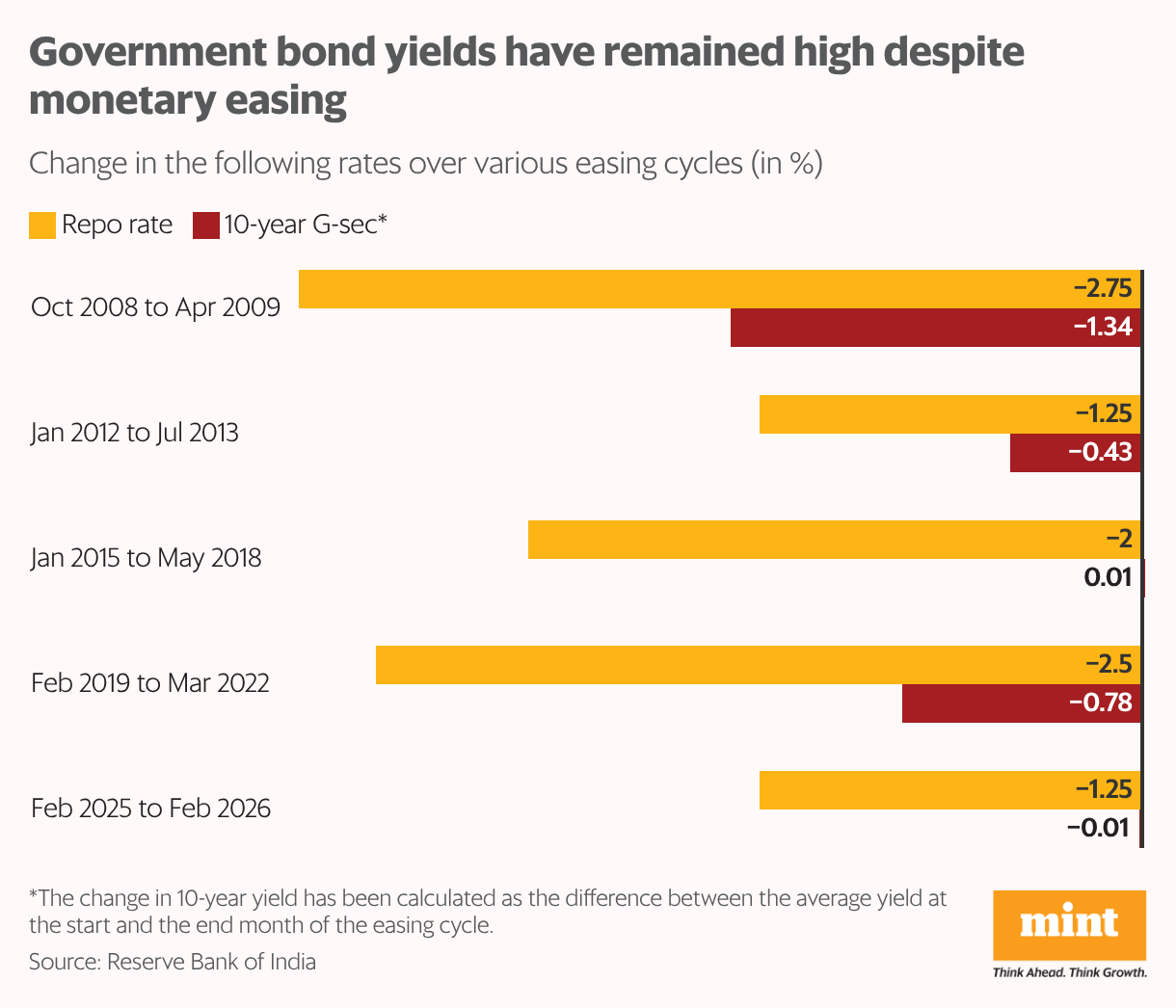
Normally, rate cuts pull down benchmark yields. This time, a mix of heavy government borrowing, weaker institutional demand, and concerns over India’s combined centre-state debt has kept bond yields sticky. Add global uncertainty and slower nominal growth, and investors see enough risk to demand higher returns. The result is an unusual inversion that complicates borrowing costs and signals caution in the bond market. Read more.
Kwality Wall’s has plans for life after HUL demerger
Kwality Wall’s India is repositioning itself as an all-season snacking brand as it prepares for life after its demerger from Hindustan Unilever Ltd.
Executives say the strategy is to move ice-cream from a summer indulgence to an everyday frozen snack, helped by rapid quick commerce growth. That’s a tall order, as 60% of sales still come during summer, underscoring the scale of the behavioural shift it must drive. Introducing Ben & Jerry’s in India may just be the trump card. Read more.
NEWS IN NUMBERS
$170 million
The estimated loss Walt Disney Inc. incurred from its live-action Snow White remake, which cost about $336.5 million to produce, making it one of the studio’s biggest flops.
1.81%
India’s wholesale inflation in January, rising after six months of muted growth, due to higher prices of metals, textiles, and manufactured goods.28.85%
The drop in box-office earnings for Shahid Kapoor’s film ‘O Romeo’ on Day 3, amid the India-Pakistan T20 match, with total domestic collections reaching ₹30.15 crore.353.559 tonnes
The silver inventory level on the Shanghai Futures Exchange as on 13 February, after hitting a more than ten-year low of 318.546 tonnes on 9 February.85%
The surge in crypto payments to suspected Southeast Asia-based human trafficking syndicates in 2025, with total transactions reaching hundreds of millions, per Chainalysis.₹6,889 crore
The enterprise value at which Torrent Power will acquire 100% equity and convertible instruments in Nabha Power from L&T Power Development, a subsidiary of Larsen & Toubro.24%
The share of winning 2026 BMC poll candidates with declared criminal cases, with 13% facing serious charges, according to an ADR study.AROUND THE WORLD
Millions face starvation in Congo. Their new rulers are to blame.
Workers are afraid AI will take their jobs. They’re missing the bigger danger.
It’s the most intimate sport at the Olympics. This pair is doing it as exes.
Netflix’s Warner Bros. deal us under fire. Why the odds are shifting in Paramount’s favour.
LOUNGE RECOMMENDS
‘Tu Yaa Main’ Review

Directed by Bejoy Nambiar and adapted by Himanshu Sharma from the 2018 Thai thriller The Pool directed by Ping Lumpraploeng, Tu Yaa Main is a curious addition to Hindi cinema’s sporadic engagement with the creature feature.
The original was a compact, high-concept survival drama built around the simple premise of a man trapped in a drained swimming pool with a crocodile, trying to find a way out.
Nambiar retains the skeletal premise but sheds the minimalism, expanding the thriller framework into a 145-minute romantic drama inserted with class commentary and influencer satire. The result is an ambitious film intermittently exhausting itself instead of tightening its grip. Read more.
WHAT THE FACT
America’s Wartime Coffee

The Americano was born during World War II, when American GIs in Italy diluted strong espresso with hot water to mimic the drip coffee they were used to back home. Interestingly, the drink appeared even earlier in literature. In 1929, W. Somerset Maugham mentioned it in his short story The Wash-Tub, calling it “by no means a bad substitute for a cocktail”. Today, the Americano remains one of the world’s most widely loved coffee styles.
Edited by Alokesh Bhattacharyya. Produced by Tushar Deep Singh.
 |
|