

For many Visa Inc. employees in India, 29 July began like any other workday, until an early morning email from HR ended it before it had even started. The payments giant is cutting about 2,600 jobs, or 7% of its global workforce, as it restructures around AI and what CEO Ryan McInerney calls the era of “Agentic AI”, where autonomous systems perform tasks with minimal human intervention.
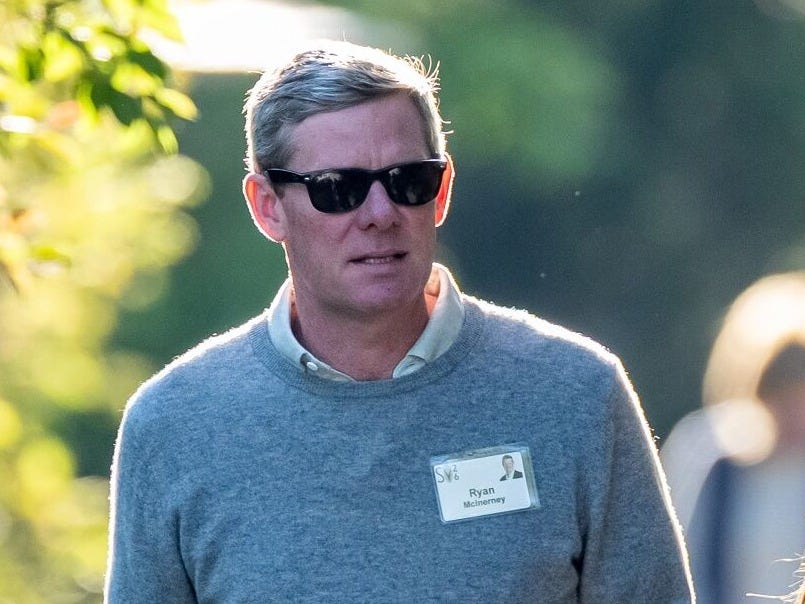
India, Visa’s largest technology hub outside the US, was hit hard, although the company has not disclosed local numbers. Employees told Mint that entire teams were gutted, with layoffs affecting engineers, managers and even senior leaders with more than two decades at the company. Many lost access to company systems within days, leaving once-bustling Bengaluru offices eerily quiet.
The layoffs reflect a broader shift underway in the technology industry. AI is not only automating routine work, but also slowing hiring and prompting companies to rethink workforce size. Employees said Visa had already been trimming contractor hiring, cutting software vendor spending, and encouraging greater use of AI tools before the layoffs. Ironically, even as staff were told to embrace AI, the company later imposed limits on AI usage because of soaring costs. Read more.
THE MAIN STUFF
Why ITC investors are looking beyond a weak quarter
ITC Ltd.’s June-quarter results disappointed, but investors focused on signs that the worst may be over. The cigarette business, hit by February’s steep tax hike, saw EBIT fall 35%, even as volume decline was milder than expected and profitability improved through the quarter as staggered price hikes kicked in. FMCG and paper businesses delivered strong growth, partly offsetting weakness in agri.
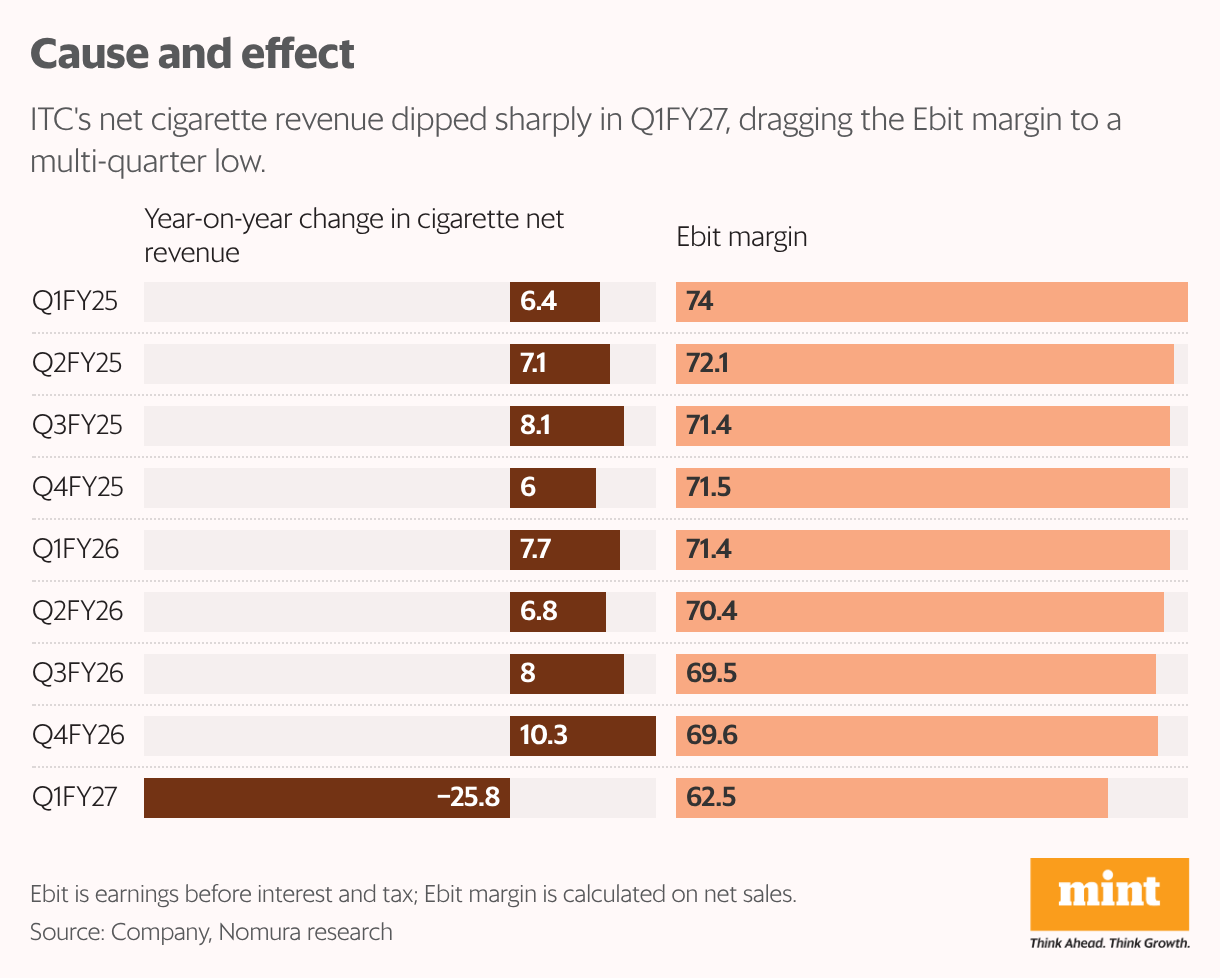
Brokerages now expect cigarette margins to recover as price hikes take full effect, with Jefferies upgrading the stock to Buy. The market appears to believe ITC has absorbed the biggest tax shock and is entering a steadier phase. Read more.
FPIs return to India
The foreign portfolio investors (FPIs) turned net buyers in July, a first in five months, pumping ₹6,732 crore into Indian equities. Along with strong domestic institutional buying and aggressive short covering in index futures, the inflows helped lift the Nifty 50 2.2% during the month.
Analysts believe easing geopolitical tensions in West Asia and a cooling AI trade could fuel a rally back to the Nifty’s pre-war peak of 25,179. But the optimism comes with a caveat—any fresh escalation in the conflict could quickly derail foreign inflows and the market’s recovery. Read more.
MINT LONG STORY
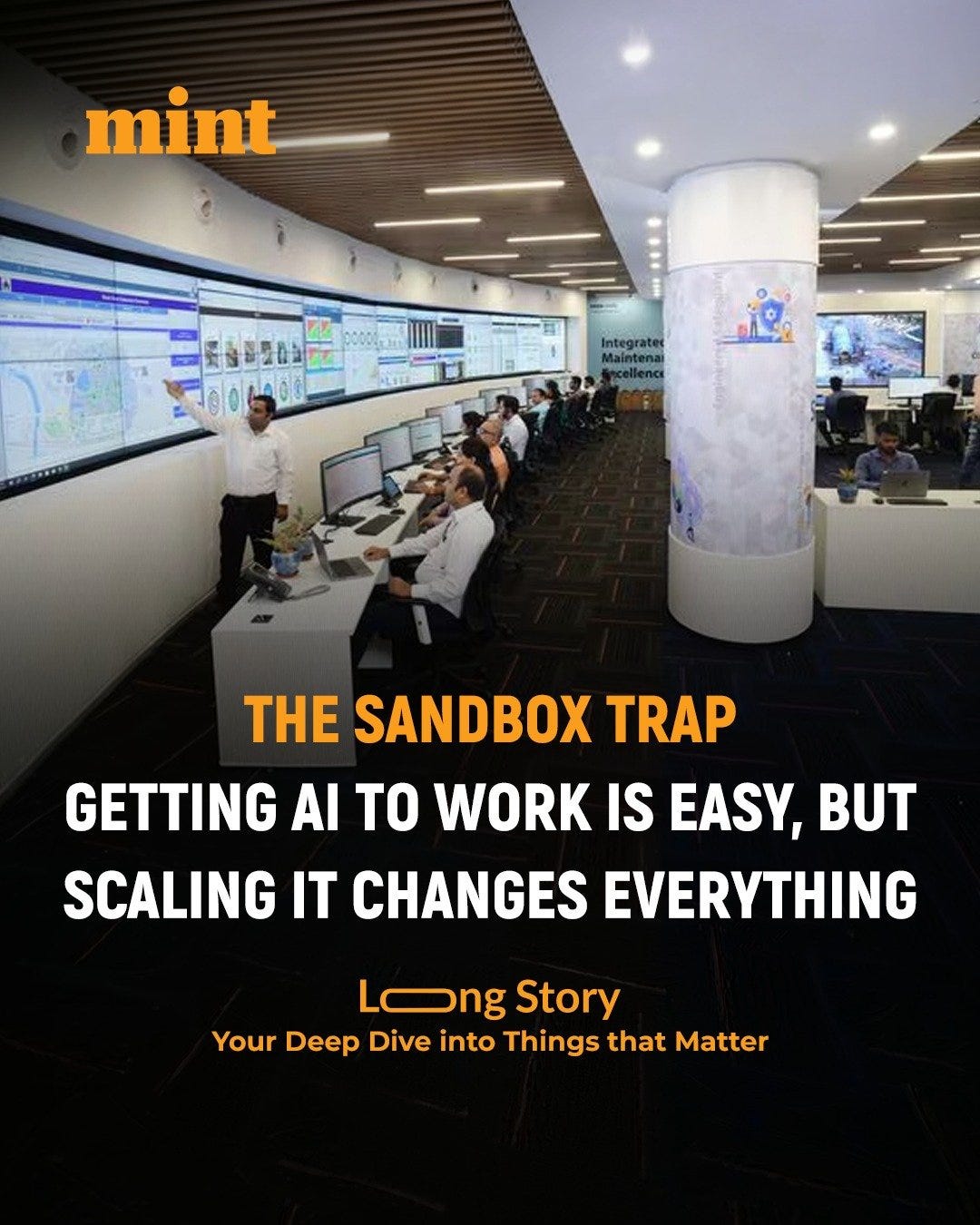
Nearly half of India Inc. runs live AI pilots, but only 15% manage to scale them. Beyond the hype lies a landscape of operational friction, messy data, and unproven return on investment. Here’s how industry leaders overcome the sandbox trap. Read more.
Swiggy and Eternal: Two recipes for growth
Swiggy Ltd. and Eternal Ltd. are taking different routes to the same goal of finding new food delivery customers.
As order growth from existing users slows, Swiggy is betting on its low-cost meals app Toing to attract price-sensitive consumers using its existing network.
Eternal believes affordable meals require rethinking how food is made, backing Blinkit’s Bistro with company-run kitchens and redesigned supply chains.
Both strategies aim to expand the market without diluting their flagship brands. With new rivals such as Rapido and Flipkart entering the fray, the race is now about building the next wave of demand, not just winning existing users. Read more.
Meta’s AI push costs Wipro another key client
Meta Platforms Inc. has cut at least a quarter of the IT work it outsources to Wipro Ltd. after an AI-led restructuring shut its digital marketing arm, trimming the Indian firm’s annual revenue from the social media giant to ~$75 million from $100 million.
The move, which also affected other vendors, is Wipro’s second major client setback in under six months. Around 200 employees have been benched for redeployment.
While the loss reflects Meta’s broader automation and insourcing strategy rather than Wipro’s execution, it adds to concerns over the IT company’s sluggish growth amid rising AI-driven disruption. Read more.
NSE, Jio to bring the IPO party to Dalal St
India’s IPO market is showing signs of a comeback after a slow start to the year, with bankers betting that the blockbuster listings of NSE and Jio Platforms in September will cement the recovery. Together, the two issues can raise ~₹68,000 crore, setting new records and providing valuation benchmarks for companies waiting to go public.
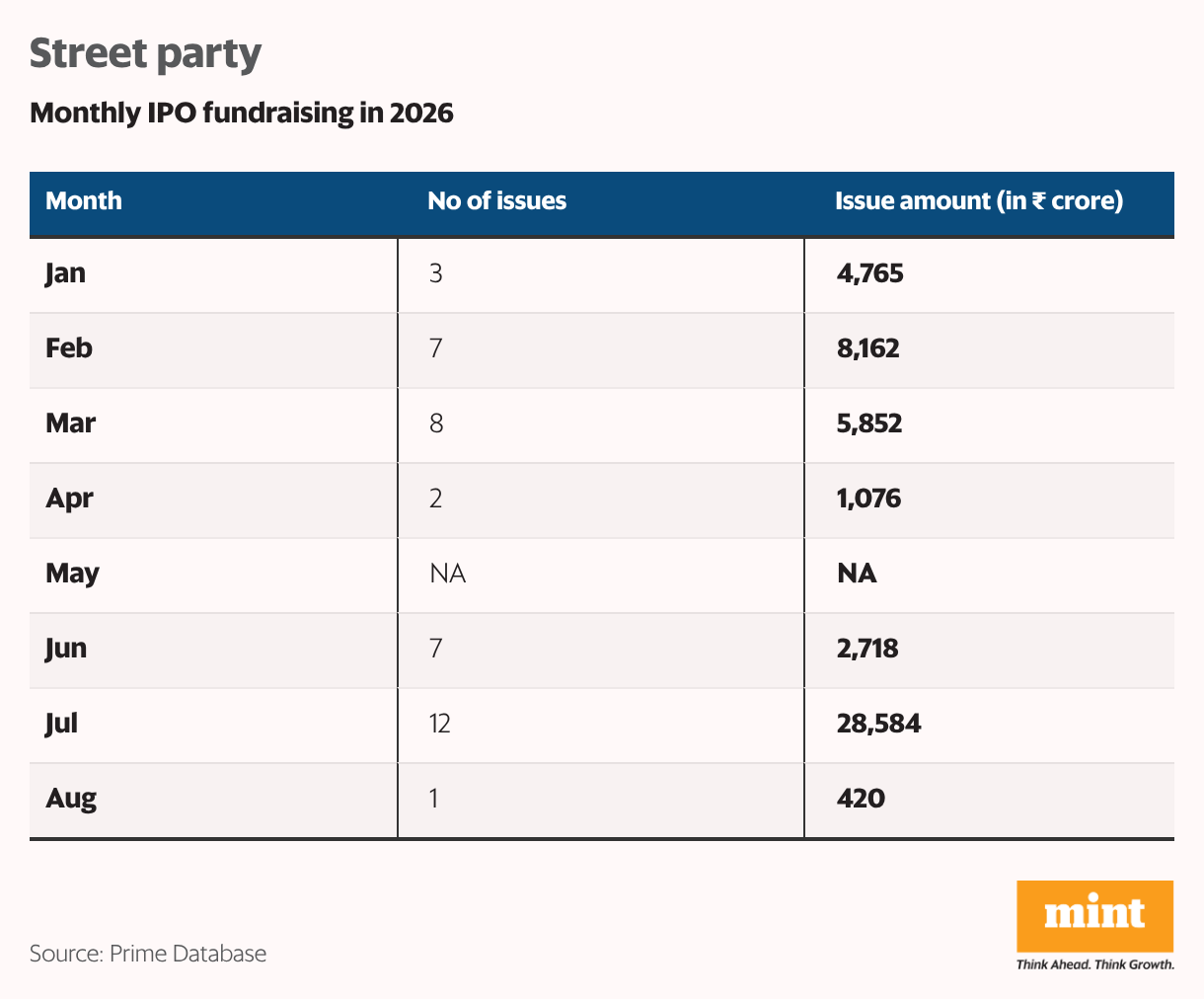
July was already the strongest month for IPO fundraising in 2026, with ₹28,584 crore raised across 12 issues. Bankers say improving sentiment, strong domestic demand and a robust pipeline could help this year’s fundraising surpass last year’s record.
🔢 NEWS IN NUMBERS
$927 million
The global box office collections for Sony and Marvel’s Spider-Man: Brand New Day in the opening weekend, making it the second-largest global debut of all time.
$5.78 billion
The amount companies have raised through IPOs in India so far in 2026, down from $7.32 billion in the same period last year.
₹20,200 crore
The value of Indian stocks bought by FPIs in July after four consecutive months of selling, driven by stable macro conditions and corporate earnings.
25,000 acres
The estimated land area now under rambutan cultivation across Kerala, generating about ₹1,000 crore in revenue this season.
53.5
The HSBC India Manufacturing PMI reading for July, marking the slowest pace of expansion in about five years, amid moderation in new purchase orders.
₹483.04 crore
The consolidated net profit reported by Persistent Systems Ltd. in the April-June quarter, up 13.67% from ₹424.93 crore in the year-ago period.
250,000
The estimated number of travellers affected by flight cancellations over a three-day holiday weekend, after Canada’s WestJet flight attendants went on strike over pay disputes.
howindialives.com
AROUND THE WORLD
France and Spain are suffering their biggest wildfires on record
Big Tech earnings are sending valuations in wildly different directions
CHART OF THE DAY
LOUNGE RECOMMENDS
Why every firm must have an AI code of ethics
In his new book, Vineet Nayar argues that algorithms inherit our moral compass—and leaders must actively steer AI guardrails instead of passing the buck to code. Read more.
WHAT THE FACT
Man behind the bubbles

On this day in 1693, legend says Dom Pérignon invented champagne. While historians agree he didn’t actually create sparkling wine, the Benedictine monk played a pivotal role in perfecting it. As cellar master at the Abbey of Hautvillers, he introduced the techniques that improved grape blending, pressing, and wine quality, helping lay the foundations for modern champagne production.
The part worth sitting with: this cut people with 20-plus years, not just juniors. That breaks the usual 'AI deletes entry-level work' story. When a company rebuilds around agentic AI, it keeps whoever owns the decisions and thins whoever ran execution, at every level. Tenure stops protecting you the day your last shipped result goes stale. In the India pay data I track, the premium now sits on one thing: a recent outcome you can defend. Average raises are near 9% (Aon India 2026); scarce AI skills clear 18 to 35% (Deloitte 2026). What is the last thing you shipped that you would put your name on, and how recent is it? Zia. AI career strategist for Indian professionals. itszia.ai