
E85 is here to test your flexibility on fuel
Indian Oil and its peers are set to begin a phased rollout of E85 fuel from today.

On World Environment Day, India crossed a milestone. The state-run oil marketing companies, led by Indian Oil Corp. Ltd., are beginning a phased rollout of E85 fuel, petrol blended with 80–85% ethanol, at about 50 outlets across Delhi NCR, Mumbai, Pune, and Nagpur. It’s a small start, but the ambition behind it is anything but small.
India imports nearly 90% of its crude oil, worth over $120 billion annually, much of it routed through the Strait of Hormuz, currently disrupted by the West Asia war. Every $1/barrel increase adds ₹18,000 crore to the import bill. With global crude briefly crossing $100 and risks of another spike very real, the urgency to reduce fossil fuel dependence is real.
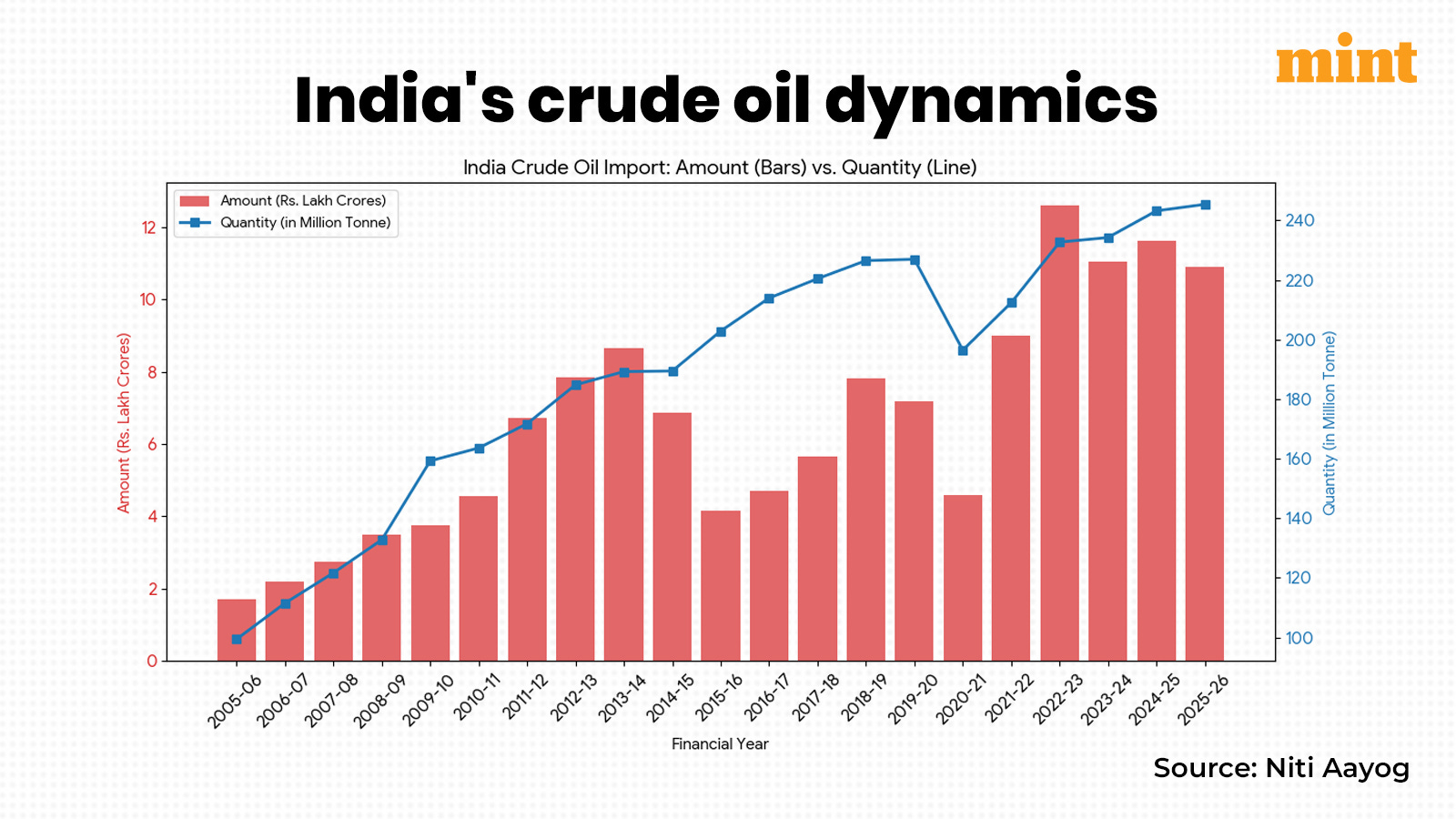
E85 fuel is India’s answer, and it benefits farmers too, as ethanol is largely sugarcane-derived. Maruti Suzuki India Ltd. and Hero MotoCorp Ltd. have already launched entry-level flex-fuel models.
Brazil made this transition in 2003; today, over 90% of its vehicles run on ethanol, petrol, or a blend of both. India is starting with 50 pumps. Brazil took two decades to build its ecosystem. How long will it take India to reach there? Read the full report by Rituraj Baruah.
In today’s edition of Mint TOTM:
Behind RIL’s sale of a step-down unit, an OFCD route
Rajesh Exports also has a battery problem
The AI-adjacent theme playing out on Dalal St.

THE MAIN STUFF
Behind RIL’s sale of a step-down unit
In April, Reliance Retail sold a profitable subsidiary with ₹9,323 crore in revenue and ₹379 crore in profit, to Jaipur Enclave—a company with zero revenue, a ₹1.92 lakh loss and barely ₹4.41 lakh in cash. The price was ₹274 crore.
Reliance called it a non-related-party transaction. Seventeen days later, a Reliance step-down subsidiary pumped ₹273.75 crore, almost exactly the acquisition cost, into Jaipur Enclave via convertible debentures. That money had been routed through three Reliance entities in a single coordinated sequence on 30 April.
If Reliance Eminent converts those debentures to equity, its stake in Jaipur Enclave crosses 99%, bringing the sold entity right back into the Reliance fold. Read on.
Rajesh Exports also has a battery problem
SEBI’s 109-page interim order against Rajesh Exports Ltd. has landed at an awkward moment. The Gold-to-EV conglomerate was one of just three companies, alongside Ola Electric and Reliance Industries, handpicked by the government in 2022 to build 5 GWh of local battery cell capacity under the ₹18,100 crore PLI ACC scheme.
The regulator’s allegations are serious. Fund diversion, opaque related-party arrangements, and a claim that 99.8% of subsidiary revenues between FY21 and FY25 were misrepresented.
A promoter-owned battery firm, Elest, saw its share valuation jump 1,900% in three months, transactions SEBI says warrant deeper examination. While Ola Electric has commissioned its plant and Reliance is building in Jamnagar, Rajesh Exports has revealed little about its battery manufacturing progress. Read more.
The AI-adjacent theme playing out on Dalal St.
India doesn’t have many pure-play AI or semiconductor listings. So, investors are doing the next best thing: buying the metal that makes all of it possible.
Copper goes into data centres, power grids, electric vehicles, renewable energy, and semiconductor infrastructure. And as AI spending accelerates globally, Indian copper stocks have quietly had a remarkable run—Hindustan Copper up 120%, Pondy Oxides up 80%, Jain Resource Recycling up 36%, all in the past year.
The government’s Copper Vision Document projects a six-fold demand increase by 2047. Domestic mines currently meet just 5% of India’s needs, leaving a structural supply gap that’s driving the rerating.
But the valuations are getting stretched. Hindustan Copper trades at 57X trailing earnings, expensive by any metal-sector standard. Read on.
India wants foreign funds to build its infrastructure
Until now, large financial investors—private equity firms, pension funds, and sovereign wealth funds—could only enter Indian infrastructure once projects were already built and running. Too risky to come in earlier, the logic went.
The government is now looking to change that.
A new PPP framework is being designed to let these cash-rich investors participate in greenfield projects across power, railways, airports, ports, and urban infrastructure right from the start. The three-year pipeline alone had 908 projects worth ₹15 trillion.
The greenfield projects carry real risks—land acquisition, cost overruns, demand uncertainty. Experts say project readiness and swift dispute resolution mechanisms are non-negotiable before serious capital flows in. Read more.
Gold at ₹15,000/gm isn’t slowing Titan down
Gold at ₹15,078 per gm. The PM urging citizens not to buy it. Customs duties nearly tripled. For most jewellery companies, this would be a moment to go quiet. Titan Co. Ltd. has instead laid out plans to double revenue and operating profit by FY30.
That wedding and everyday jewellery demand has stayed resilient plays directly into Tanishq’s hands. Titan wants 11% of India’s jewellery market and ~1,400 stores by decade’s end. Internationally, the Gulf is the big bet, anchored by Damas, acquired in 2025, targeting a doubling of its core business by CY29. CaratLane, watches, and eyecare are all expected to grow faster than the core business. Read on.
🔢 NEWS IN NUMBERS
₹52,600
The minimum pay demanded by the Indian Railways Technical Supervisors Association from the 8th Pay Commission, alongside a higher fitment factor and better allowances.
₹15.15 trillion
The size of financial irregularities SEBI found in Rajesh Exports’ books over five financial years, saying it inflated revenue through unverified overseas entities.
150
The number of organisations Anthropic PBC is inviting globally to Project Glasswing, expanding access to Mythos across 15+ countries.
₹500 crore
The amount drone maker ideaForge Technology Ltd. plans to raise through securities, across multiple channels and instruments, following approval from its board of directors.
$84.75 billion
The equity amount Alphabet Inc. plans to raise to fund AI infrastructure demands, up from the $80 billion it had announced a few days ago.
23%
The share of jobs Uber Technologies Inc. is cutting in its People and Places division, that includes HR and recruitment, to simplify team structure, affecting less than 1% of its total global workforce.
$500
The potential monthly benefit reduction Social Security recipients in 29 US states could face by 2032 when the retirement trust fund is projected to be exhausted.
howindialives.com
AROUND THE WORLD
Meta keeps delaying the release of its new AI model to developers
Top AI CEOs call for law protecting against biological weapons
SpaceX set IPO terms. How orders for its massive offering will work.
CHART OF THE DAY
LOUNGE RECOMMENDS
How Bashir Badr built bridges with poetry
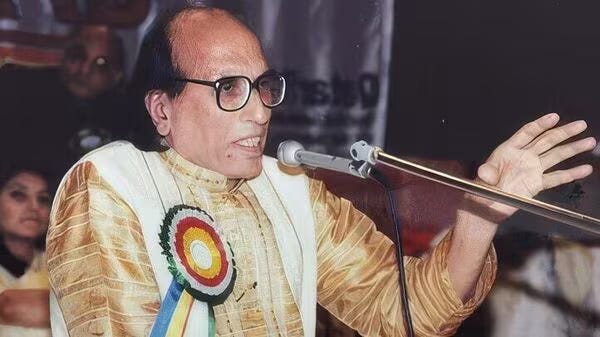
Last week, when I saw the news of the 91-year-old poet Bashir Badr’s demise on TV, the Badr lines that sprung to mind involved television itself. “Dil chhalak uthaa, aankh bhar aayi/Aaj TV pe woh khabar aayi (The heart brimmed over, my eyes went moist when I saw the news on the TV).”
Even a ghazal newbie will immediately notice two seemingly out-of-place words in this couplet: “chhalak” and of course, the English-language compression “TV”.
Badr uses the Hindi word “chhalak” and not its Urdu analogues “ubaal”, “labrez” et al, words used to indicate overflow, a sudden brimming over. Moreover “chhalak” is commonly used in the context of Awadhi, like the popular saying “adhjal gagri chhalkat jaaye” (empty vessels make the most noise). Read more.
WHAT THE FACT
The beginning of the AIDS epidemic
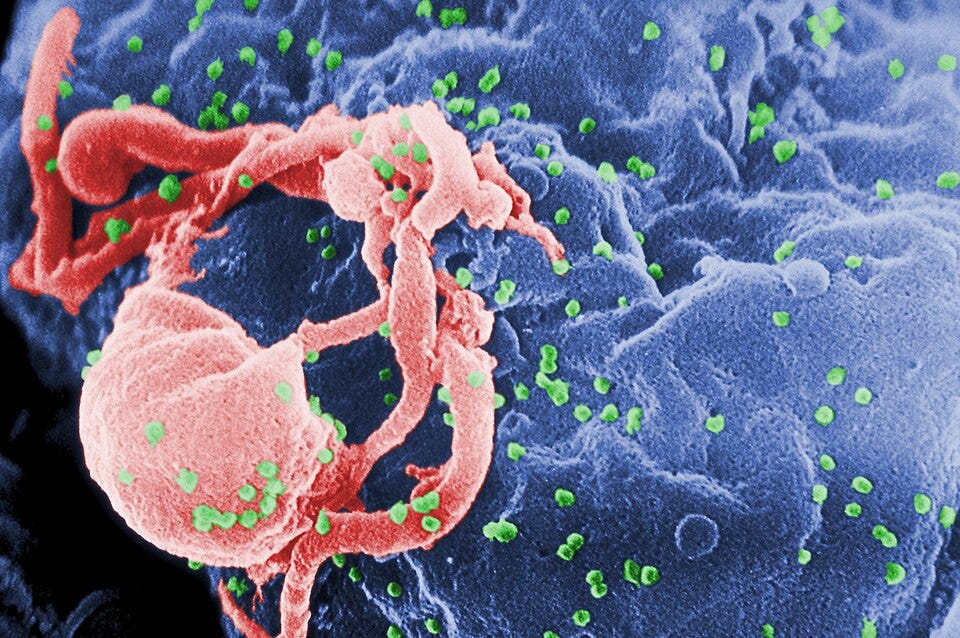
On this day in 1981, AIDS was reported for the first time after doctors in Los Angeles identified a rare form of pneumonia in five young gay men, marking the beginning of the global HIV/AIDS epidemic.
Hello how are you doing