
Adani Group picks Apple playbook for overhaul
Plus: The problem of power prices at zero; What explains the new Apple-Intel deal; and Can India drive on 100% ethanol?

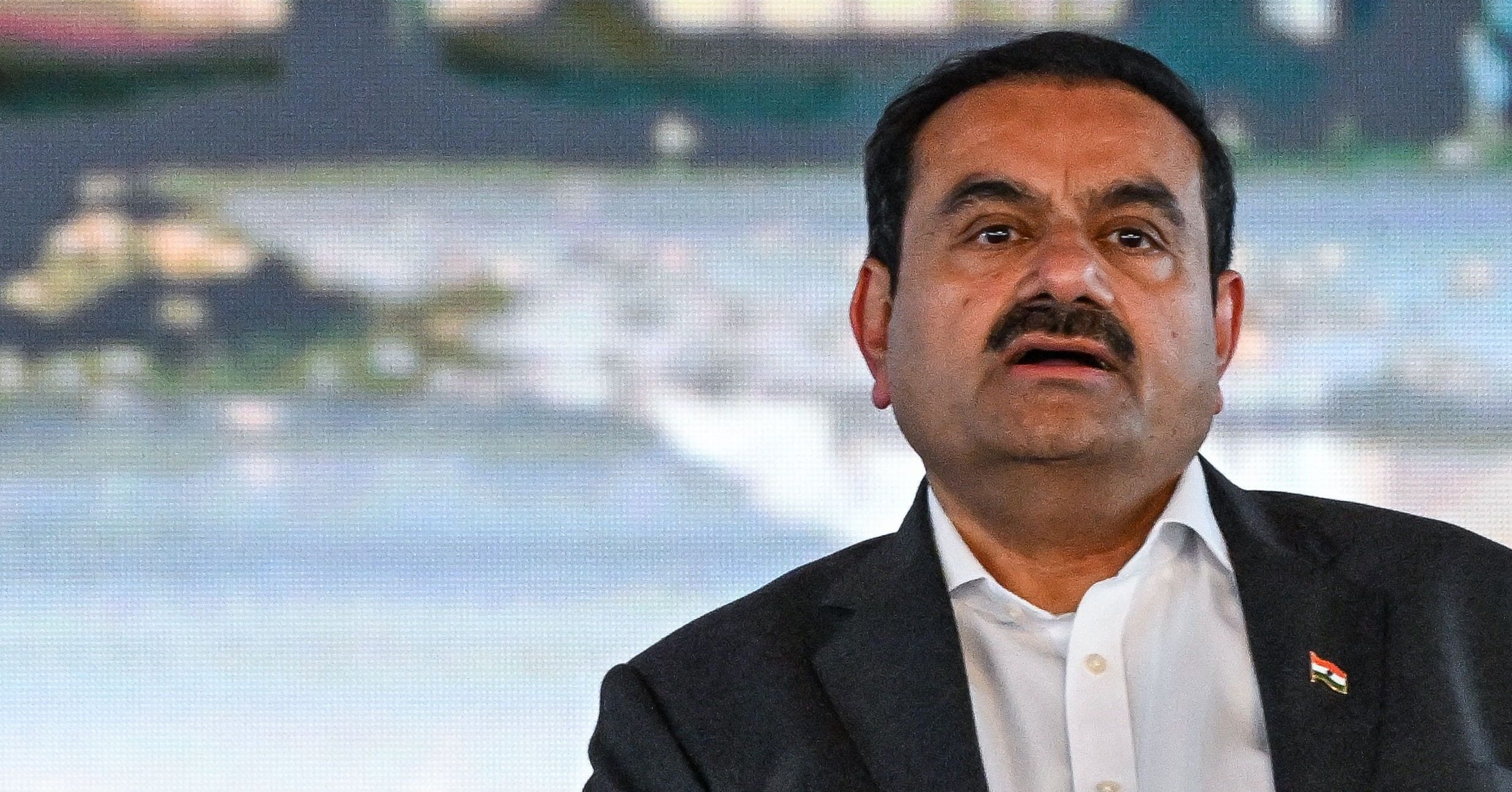
Apple Inc. doesn’t make iPhones. It designs them, controls the IP, and lets Foxconn, Samsung, and TSMC handle the rest. That’s exactly the model Gautam Adani is now importing into his conglomerate.
The Adani Group is aggressively outsourcing manufacturing, logistics, and engineering to third-party vendors, retaining only strategy, R&D, and finance in-house. The site-level employees are already being transferred to vendors. More will follow. Simultaneously, the conglomerate is flattening its corporate structure to just three layers and freezing lateral hiring entirely, betting on internal promotions instead.
“I wish for a time—very soon—when lateral hiring at the Adani Group stops completely, and we rely solely on homegrown talent,” Gautam Adani said on Labour Day.
With ₹2 trillion in annual capex committed across five years and a group that has frankly become too large to manage traditionally, the logic is straight. But experts flag real risks like vendor governance failures, cyber vulnerabilities, and the cultural fragmentation that comes with decentralisation.
Read the full story by Nehal Chaliawala.
THE MAIN STUFF
India has problem of power plenty
Even as India braces for record electricity demand this summer, power prices on exchanges have crashed to zero. It happened on 1 May, and again on 15 May. The country’s solar power capacity has surged to 154 GW, but battery storage hasn’t kept pace. So midday, when the sun is blazing, supply floods the grid with nowhere to go. Clean energy gets wasted. Generators earn nothing. Discoms sell surplus power at a loss.
The fix exists. Battery storage, better forecasting, even negative electricity pricing like Germany uses. Read on.
What explains the new Apple-Intel deal
Intel Corp. and Apple have signed a preliminary deal for Intel to manufacture some Apple-designed chips. On the surface, it’s a business arrangement. Look closer, and it’s a story about survival, geopolitics, and a chip industry being reshaped by AI.
For Intel, this is validation it desperately needs. Its foundry business has bled money for years. Landing Apple, the industry’s most demanding customer, could rebuild credibility fast. Its stock has already doubled since April.
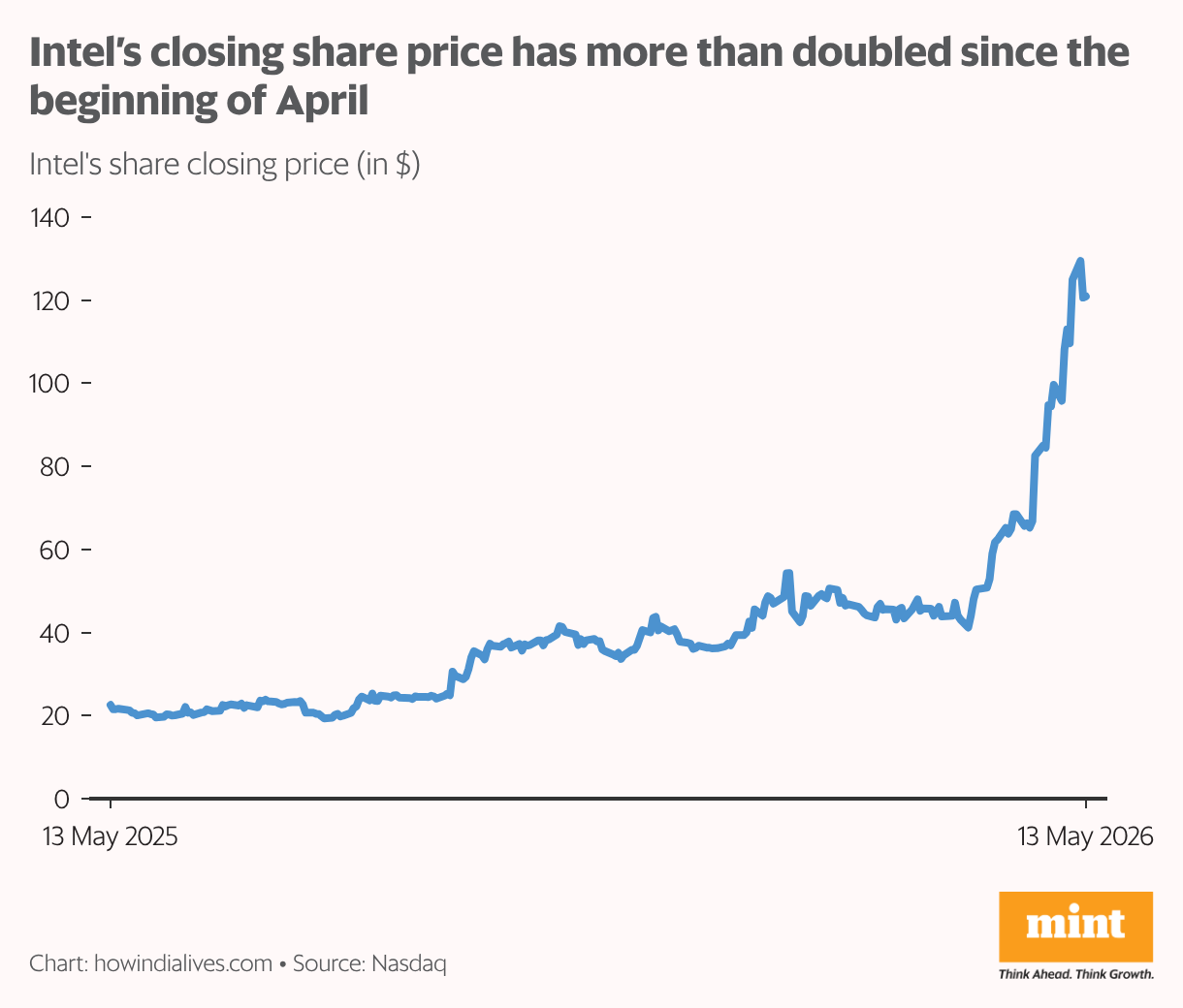
For Apple, it’s about hedging. Nvidia Corp.’s AI ambitions have pushed Apple down TSMC’s priority list. That’s a problem when you sell millions of devices annually. And Washington DC quietly helped broker this. Because keeping advanced chip manufacturing on American soil is a strategy. Read more.
SEBI’s IPO relaxation has few takers
Last month, SEBI offered listing-bound companies a generous concession—cut the IPO size by up to 50% without the usual 75-day refiling process. One month later there are barely any takers. Reason: companies would rather pull their IPO entirely than raise less money at a lower valuation.
And the market isn’t actually struggling. Three consecutive IPOs recently got oversubscribed 10-25 times—at full size, full price. The concession solves a problem the market isn’t currently having. It may matter more in June, when updated financials refresh the pipeline. Read on.
Silver ETFs set to flip to a premium
The government restricted import of silver bars over the weekend, and suddenly, the calculus for silver ETFs has flipped entirely. SilverBees was trading at a 1.3% discount to its NAV just days ago, reflecting weak demand. Now, with banks scrambling for clarity on whether they even need a licence to import silver, a supply squeeze is looking very real.
If investors rush in fearing shortages, that discount could quickly turn into a premium. ETF prices could rise faster than spot prices on the way up, and fall slower on the way down.
With gold import duty already hiked to 15% and crude above $109/barrel, the government is pulling every lever to protect forex reserves. Read more.
Brazil did it with ethanol. Can India?
Henry Ford designed his first car to run on ethanol. Brazil mandated flex-fuel vehicles in 1979. Now, with the Iran war pushing crude above $109, India is asking the same question: Can we fuel our cars with crops instead of oil?
India’s already at 20% ethanol blending, saving ₹1.7 trillion in crude imports over a decade. Now the government wants to push toward E85 and E100.
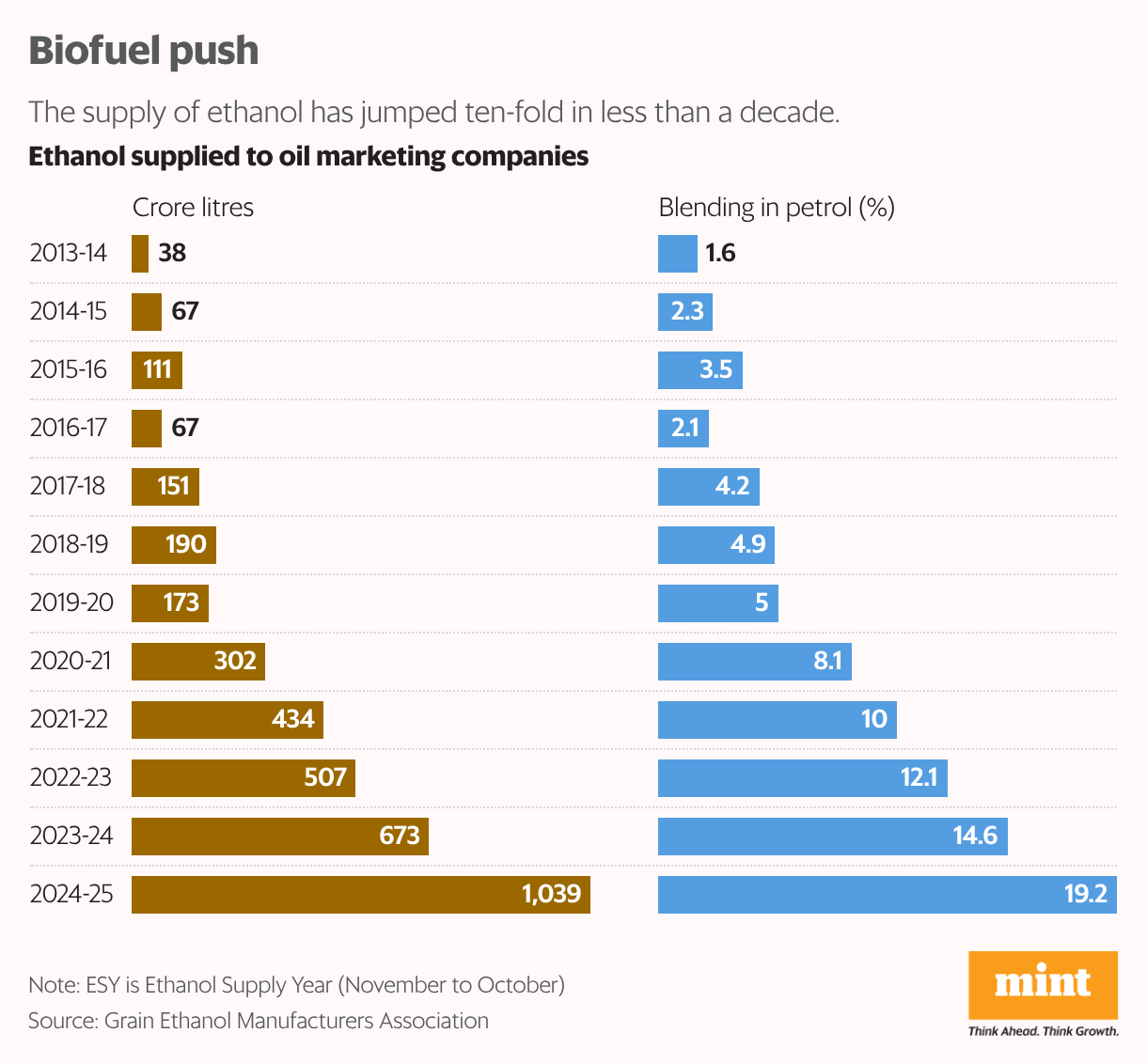
India grows far less corn per hectare than Brazil or the US. Sugar exports just got banned due to tight supplies. And farmers switching to biofuel crops are abandoning oilseeds and pulses, crops India already imports worth $23 billion annually. Read on.
🔢 NEWS IN NUMBERS
₹4,000 crore
The amount Muthoot FinCorp plans to raise through an IPO, consisting of a fresh issue of equity shares.
₹1,500 crore
The capital expenditure earmarked by Hero MotoCorp Ltd. for FY27 to double its scooter production capacity in India.
₹28,000 crore
The amount Indian Railway Finance Corporation plans to raise through external commercial borrowings, marking one of the largest overseas borrowing programmes by a state-run company.
78
The number of innings Sai Sudharsan took to reach 3,000 T20 runs, becoming the fastest to the milestone, surpassing Shaun Marsh’s previous record of 85 innings.
$1.7 billion
The compensation fund the US Justice Department is finalising for alleged victims of government “weaponisation”, reportedly in exchange for Donald Trump dropping his IRS lawsuit.
₹51,970 crore
Vodafone Idea Ltd.’s net profit in Q4 FY26, a first in years, driven by a one-time ₹58,116 crore exceptional gain due to the AGR waiver, masking an underlying loss of ₹5,515 crore.
₹28.1 crore
TCS CEO K. Krithivasan’s salary in FY26, up 6% year-on-year, even as the company faces scrutiny over layoffs, restructuring and a workforce decline.
howindialives.com
AROUND THE WORLD
Want a hot pre-IPO company in your portfolio? Proceed with caution
Grading Powell’s Fed: Good for stocks, bad for affordability
CHART OF THE DAY
LOUNGE RECOMMENDS
What explains Zubeen Garg’s pan-India success?
Assamese was, of course, his mother tongue—the language in which he thought and dreamed, the linguistic landscape that felt like home. But the Northeast’s complex demographics meant that multilingualism was a practical necessity as much as cultural richness.

Growing up with frequent relocations due to his father’s job, Zubeen had been exposed to Bengali, Hindi, Bodo and various other languages and dialects that populated the region’s linguistic ecosystem. Read more.
WHAT THE FACT
‘Smiling Buddha’ turns 52
On 18 May 1974, India detonated its first nuclear device in Rajasthan’s Pokhran desert in a test codenamed “Smiling Buddha”. The explosion made India the sixth nation in the world to successfully test a nuclear weapon, after the US, USSR, UK, France, and China.
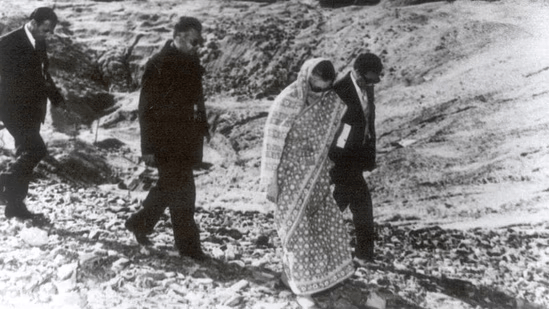
The government described it as a “peaceful nuclear explosion”, but the test made an impact through the international community, triggering sanctions and fundamentally reshaping South Asia's current geopolitical landscape. It also laid the foundation for India’s second series of nuclear tests at the same site, Pokhran-II, conducted 24 years later in 1998.